राजस्थान
Rajasthan
The Land of Maharajas
राजस्थान
Rajasthan
The Land of Maharajas
Art
Puppets
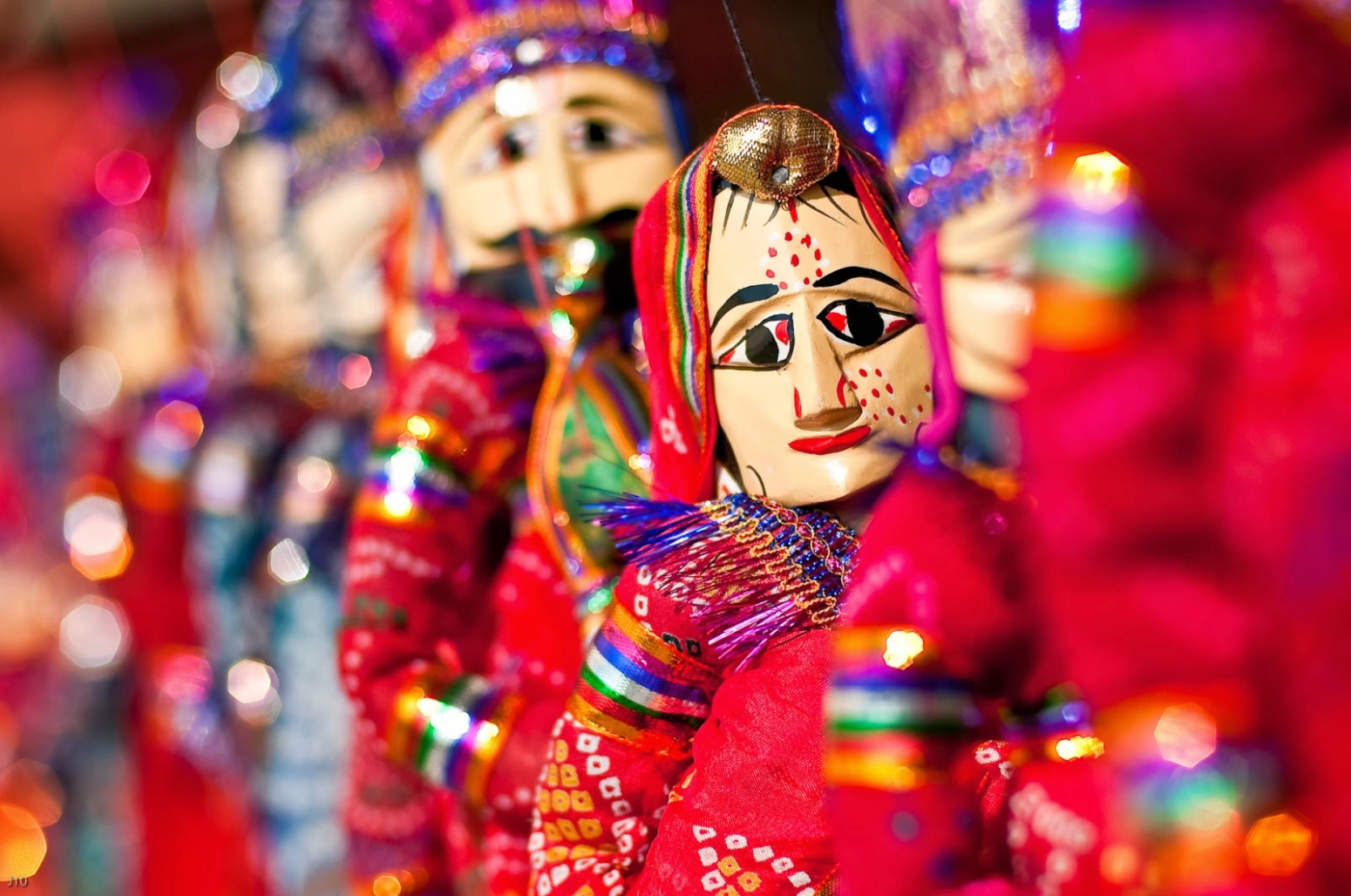
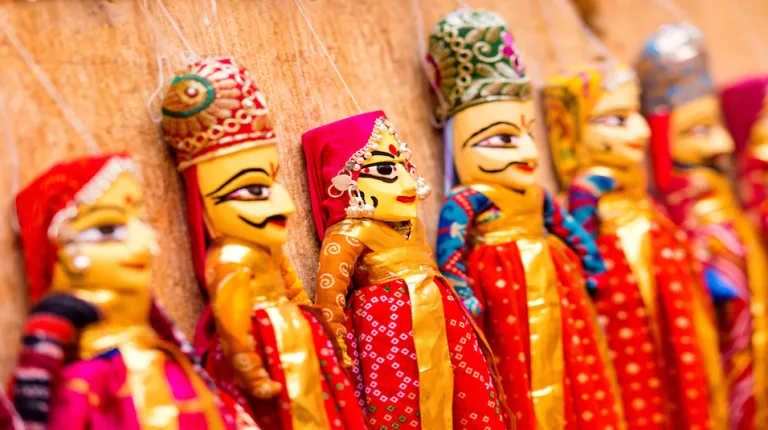
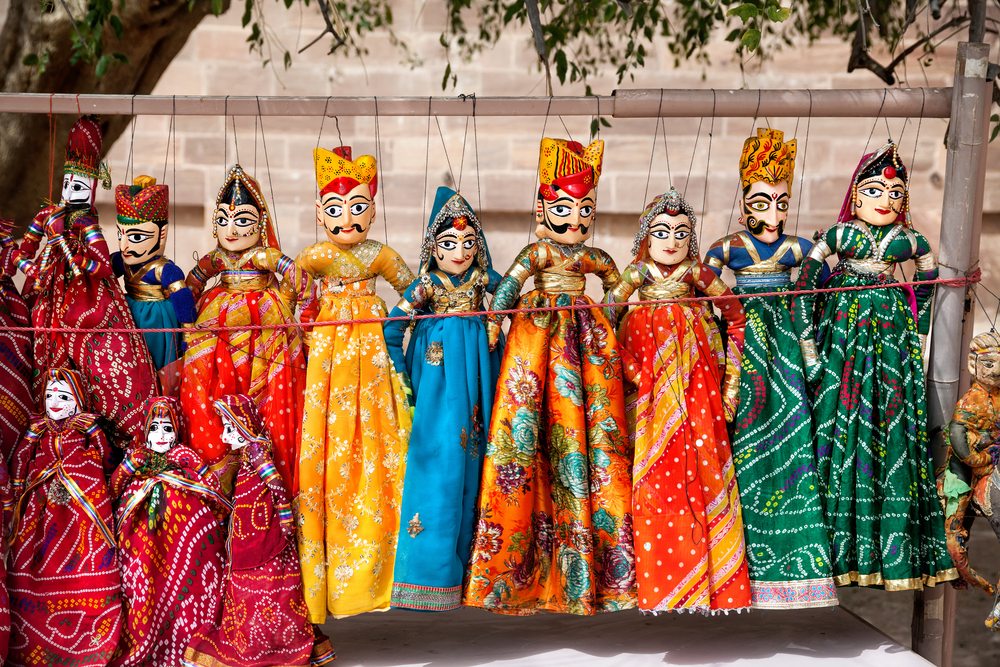
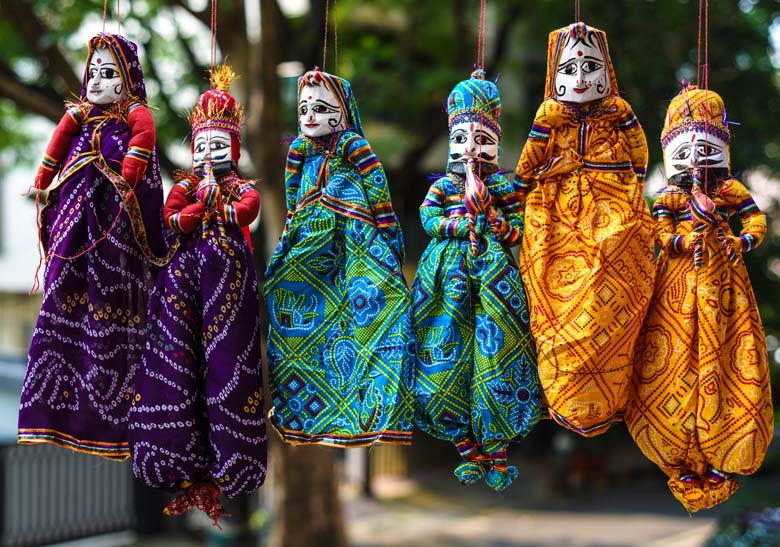
Puppets read a lot about Rajasthan’s Puppet Shows. These are the cheapest souvenirs that we can bring. This home decor item reminds you of the town’s beautiful queens and chivalrous kings. The charming puppets are made of painted wooden heads, draping in them with dresses made from sequinned old fabrics and stuffing rags. We have a distinctive look as we donate handsome traditional clothes with painted eyes and mouths, arched eyebrows, men’s mustache and women’s nose ring. Indeed, these are the hallmarks of culture and heritage Rajasthani.
Pottery
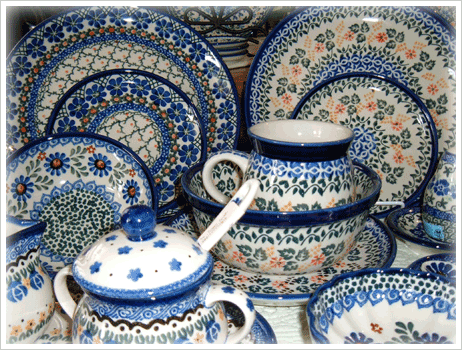
Although it is a bit difficult to pack and take away – due to the chances of breaking – Rajasthan’s fascinating range of pottery and earthenware is worth looking over. Different parts of the state have their own distinct styles of pottery-Alwar, for instance, is famous for its thin earthenware known as kagzi (paper) pottery; the village of Mollela (near Udaipur) is renowned for its terracotta ware, especially its fine reliefs of deities such as Ganesh; while Jaipur, the capital, is famed for its blue pottery.
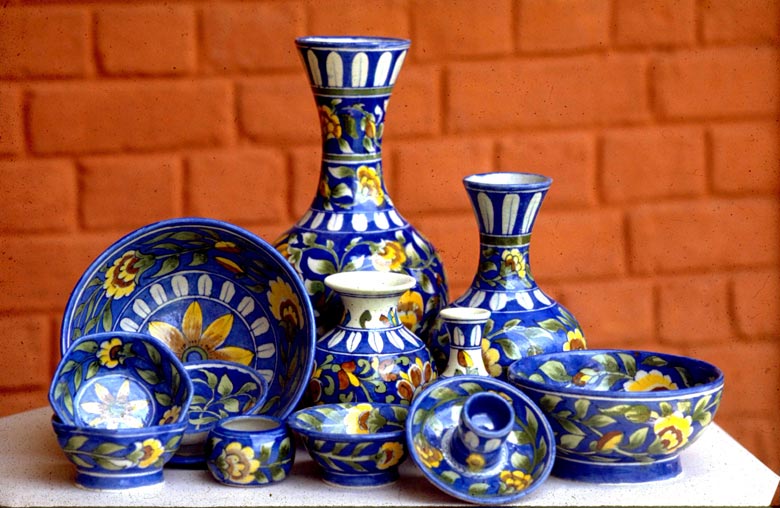
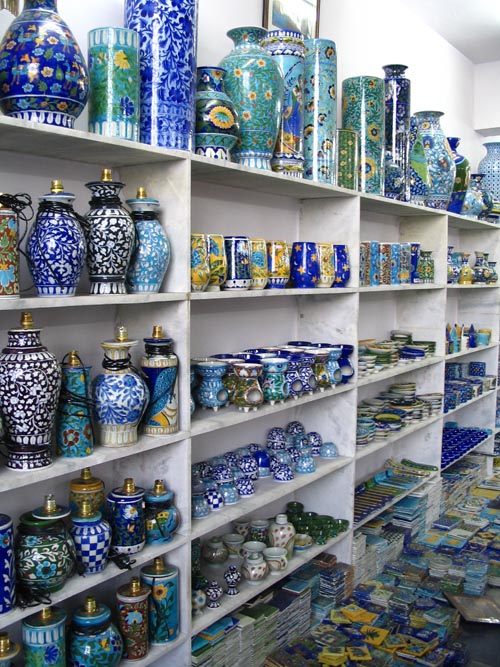
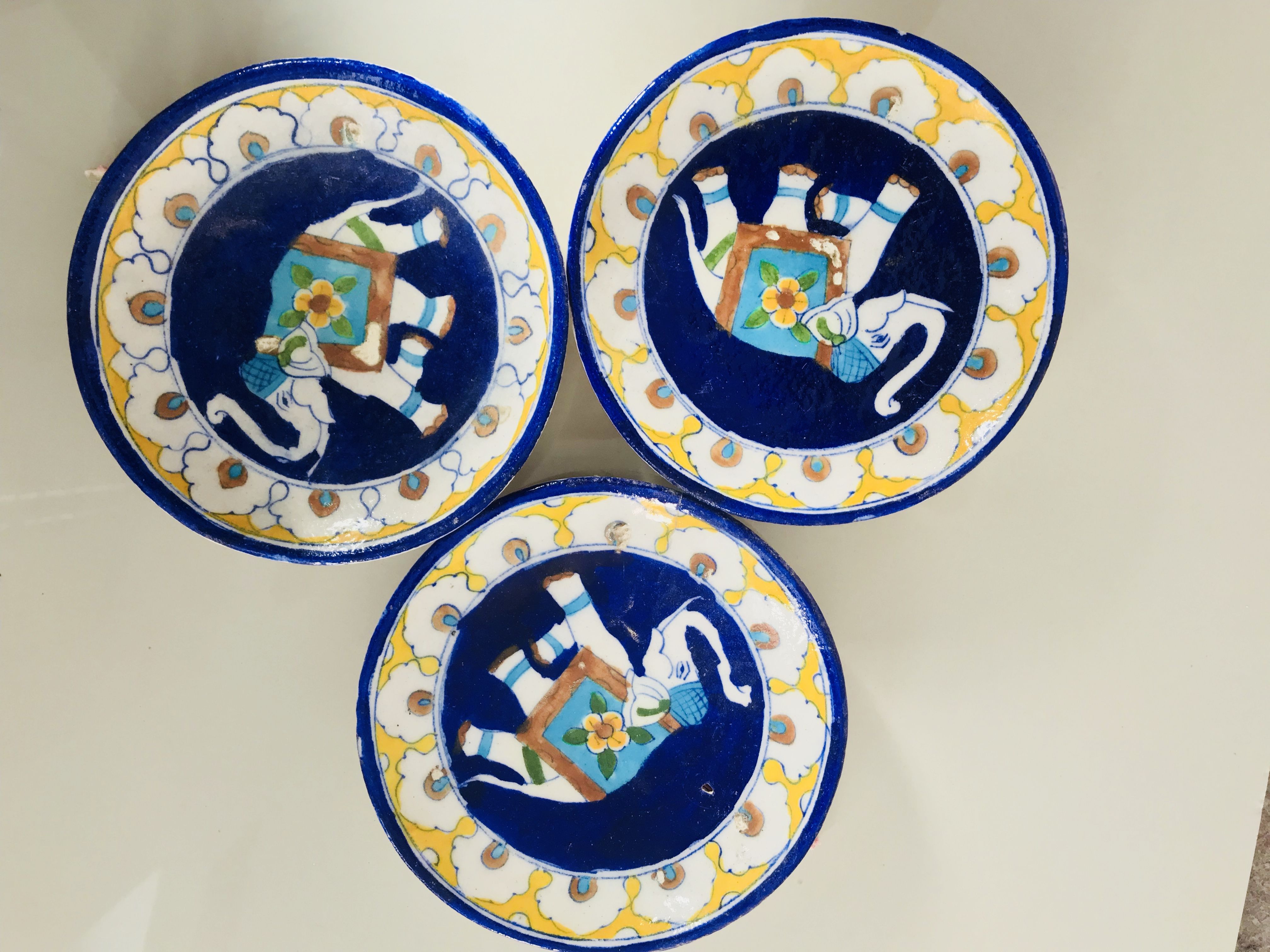
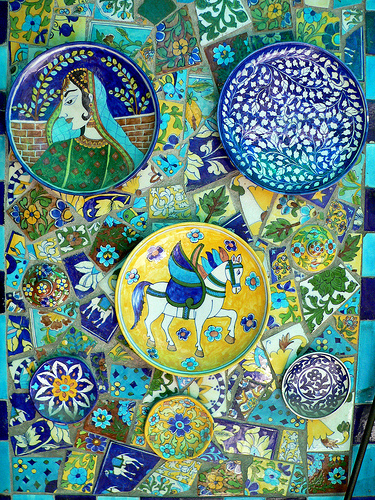
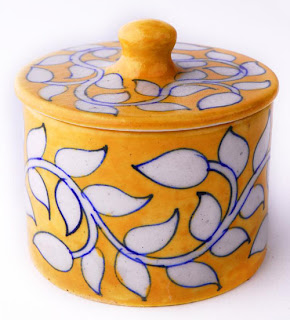
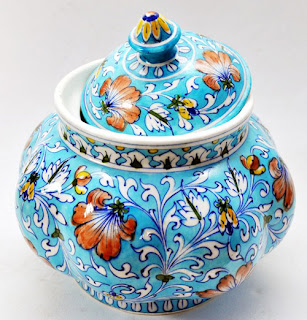
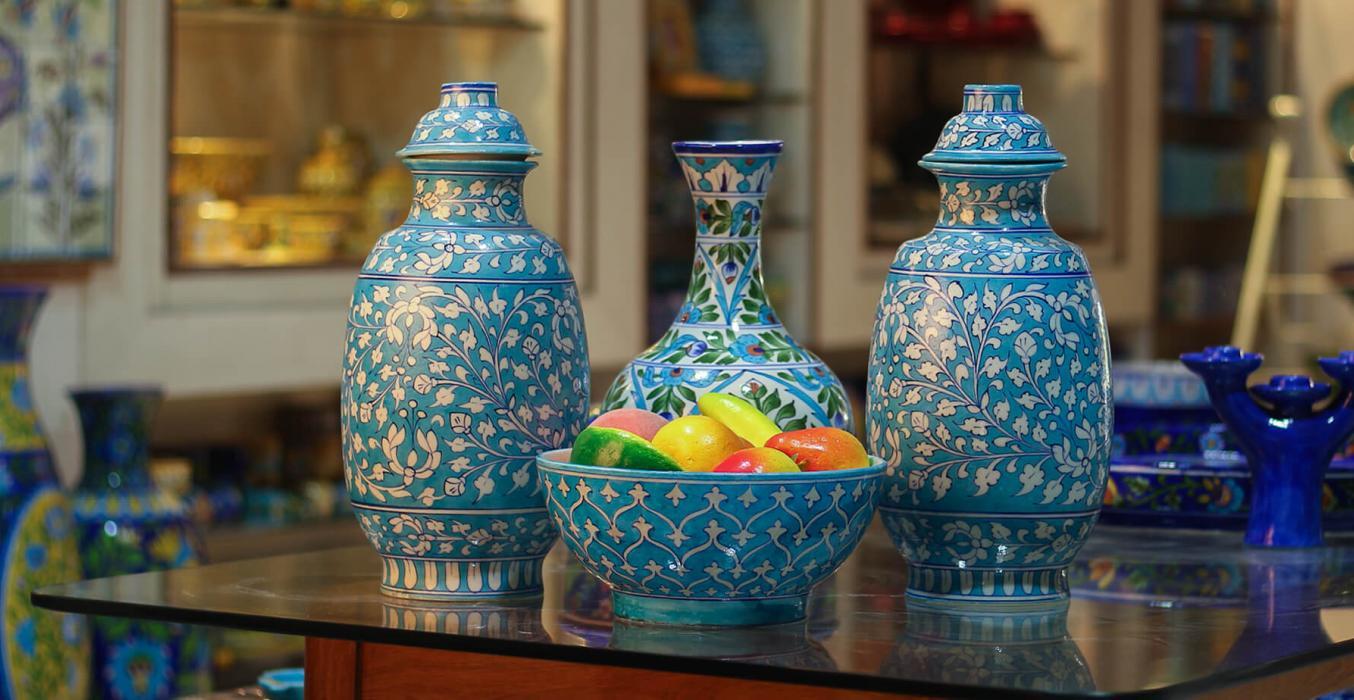
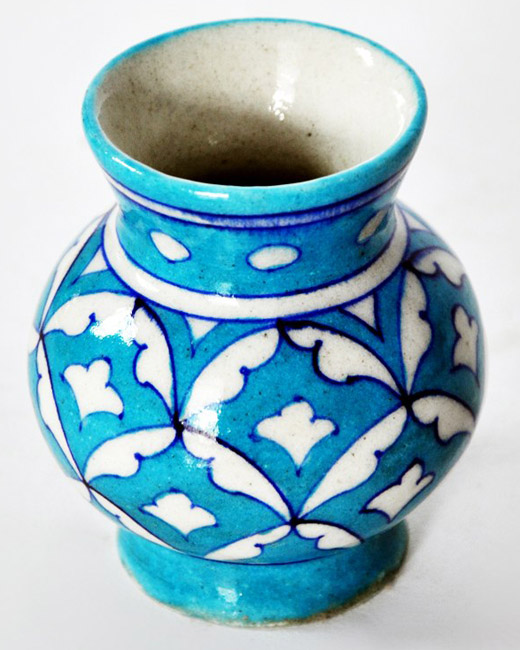
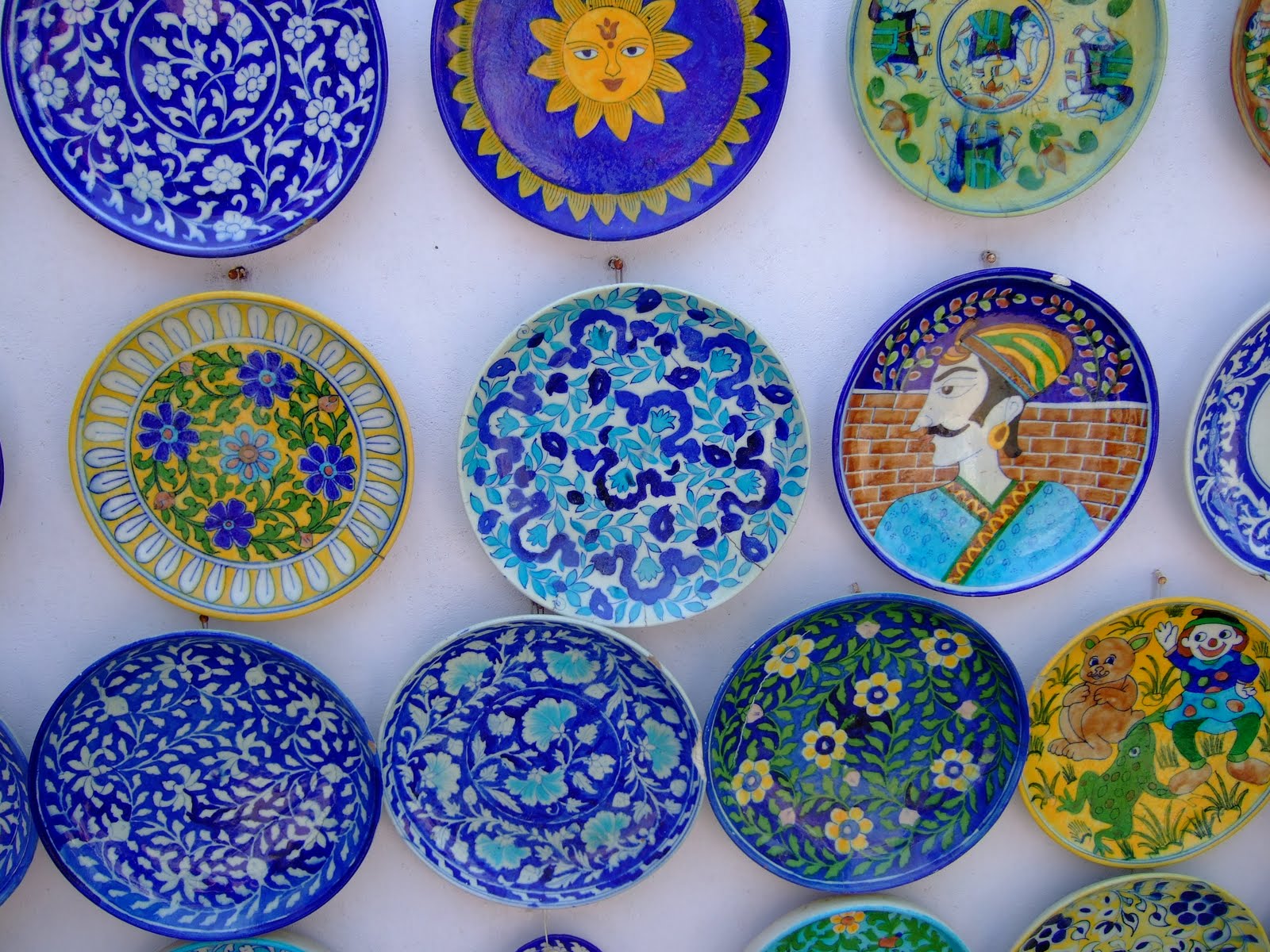
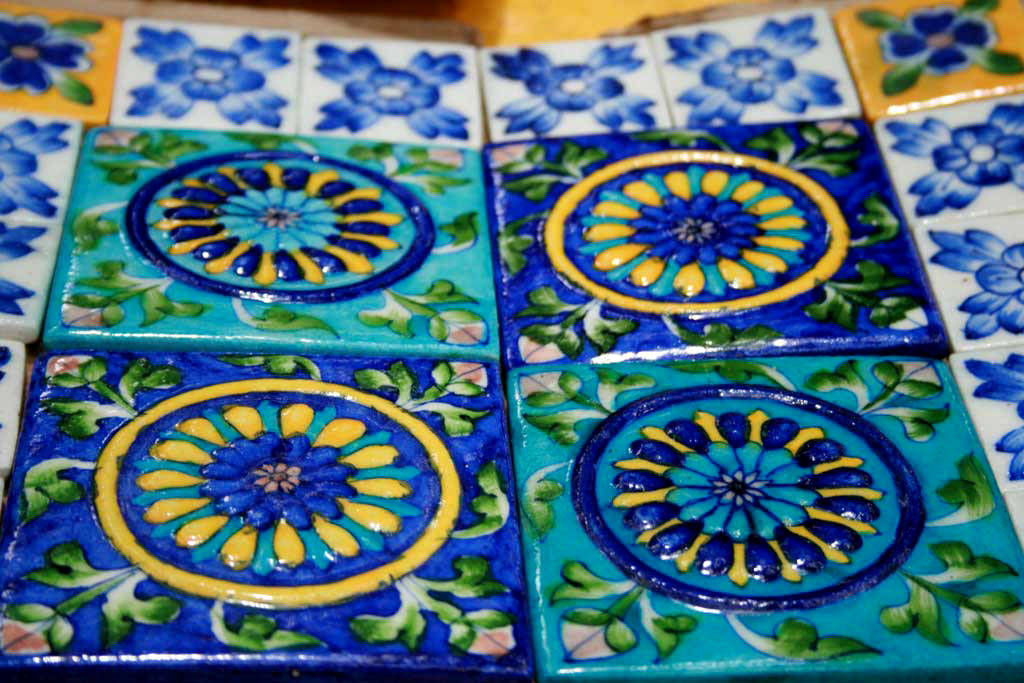
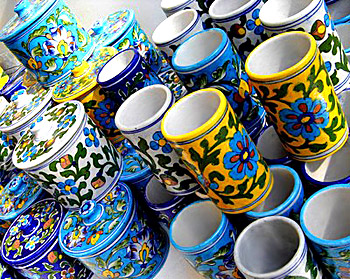
A fragile piece of pottery, Jaipur blue is made of so-called ‘Egyptian paste’, which is a self-glazing clay used to produce items that are wood-fired at low temperatures. The resultant items – vases, ashtrays, coasters, bowls, etc- are all painted in a delicate (usually floral) patterns of a distinctive blue and white. Very different from Jaipur blue, is the pottery of Bikaner, which is decorated with lac and gilt.
Jaipur, Rajasthan is one of the most culturally rich cities in India with an exquisite history that brought around an era of skilled craftsmen and artisans. One of such crafts and craftsmen was the potters skilled in the art of Blue pottery, a form of pottery that is extremely lavish, and extravagant. The Art of blue pottery came to Jaipur from Persia and Afghanistan via Mughal Courts. The dough to form the pottery is made by mixing 6 ingredients quartz stone powder, powdered glass, Katira Gond powder, Multani Mitti, and Saaji, and water. The blue color or greenish-blue color is obtained by the combination of crude copper oxide with salt or sugar in a furnace and then filtering it for use and the dark ultramarine color is obtained from cobalt oxide.
Creating the right blend by mixing quartz stone powder, powdered glass, Multani Mitti (Fuller’s Earth), borax, gum, and water is at the core of Jaipur Blue Pottery. The pottery is completely different from the regular ceramics which use the clay from the river bed, which results in its uniqueness and exclusivity.
Blue Pottery of Jaipur is very famous all over the country and even in the world. The artwork is called Blue Pottery because the clay colors are in blue which is done with shades of blue. These are paired with gold and silver designs and the style of art is actually derived from the Turko-Persian style. The blue color used to paint the sculptures is actually a color that is created by Egyptian technology such as Multani clay, Katira Gond, common gum, sodium bicarbonate, and water. The blue pottery of Jaipur is easily recognizable in any local market and is beautifully designed which is done in blue and golden colors. These vessels mostly have designs of birds and animals such as horses and camels. You can buy ashtrays, jars, cups, tea sets, small bowls, crockery, and many other utensils.
Apart from Turkey, the form was developed by Mongol artists in the 14th century and then transferred to the Chinese who were inspired by the Persians’ construction and artworks on mosques, palaces, and tombs in various parts of Central Asia. When it came to India with the Mughals, they started using it in various architectures, and later it was introduced in Delhi and transferred to Jaipur artisans in the 17th century.
The craft became popular and became the special art of Jaipur from the early 19th-century era under the reign of Sawai Ram Singh. Various antique and long ago ceramic blue pottery works can be seen in the museum of Rambagh Palace. It was then revived by the conscious efforts of some artists and the royalty of Jaipur that today Jaipur Blue Pottery is the famous world over for its delicate motifs, subtle color blends, and innovative product designs. Originally available only in the traditional cobalt blue now it has added turquoise blue, yellow, and soft green to its palette. Blue pottery has now become the common livelihood of the local artisans of Jaipur.
Paintings
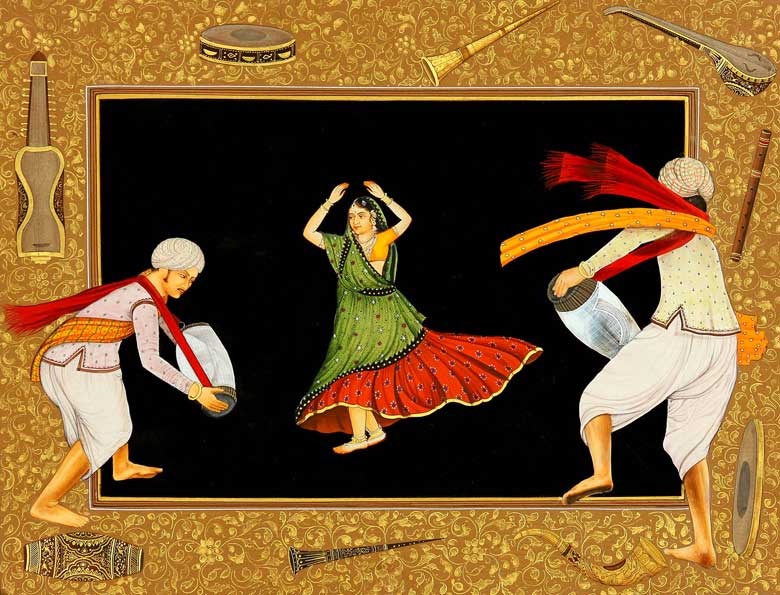
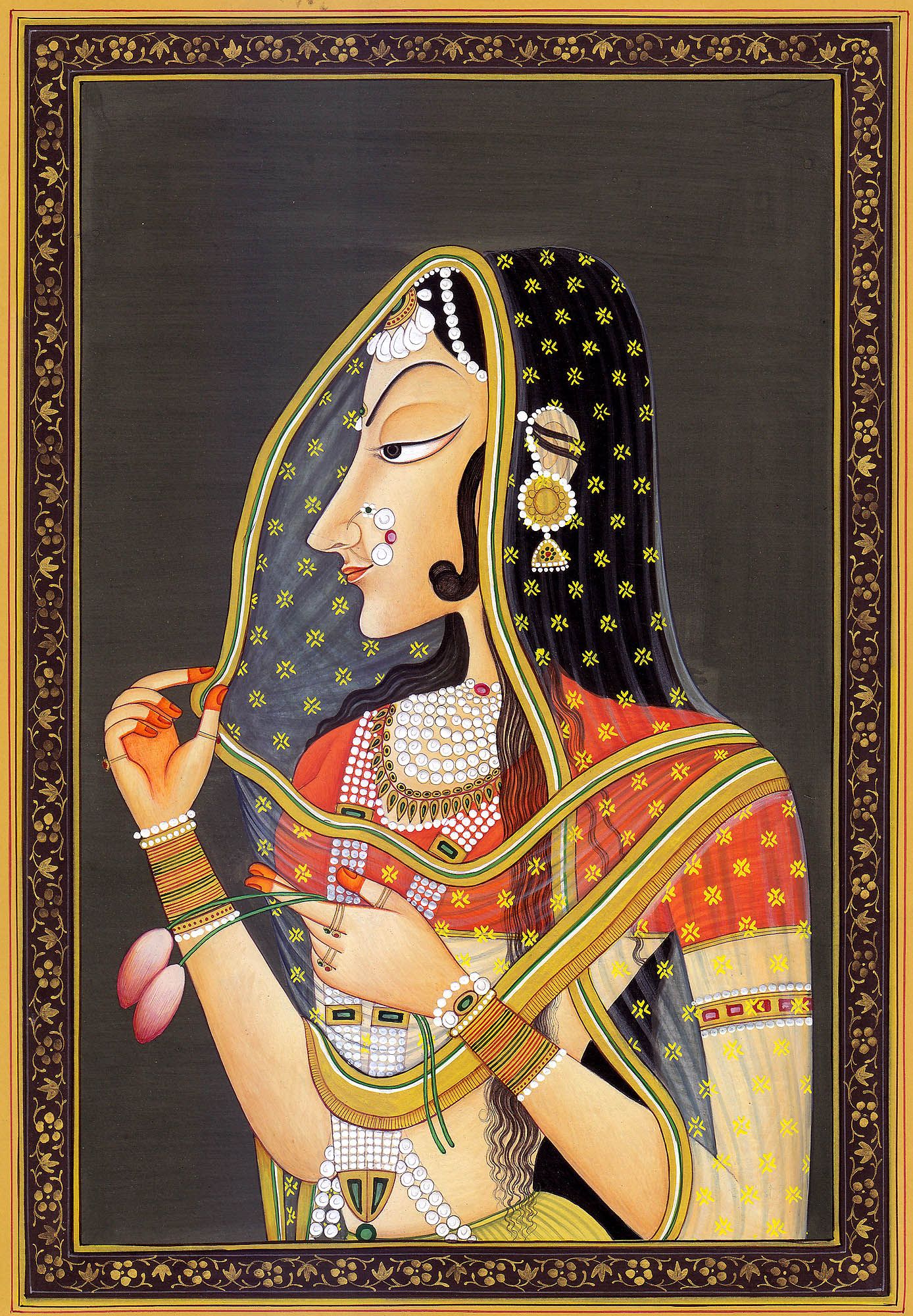
Apart from the architecture of Rajasthan, the most notable forms of the visual art of Rajasthan are architectural sculpture on Hindu and Jain temples in the medieval era, in painting illustrations to religious texts, beginning in the late medieval period, and post-Mughal miniature painting in the Early Modern period, where various different court schools developed, together known as Rajput painting. In both cases, Rajasthani art had many similarities to that of the neighbouring region of Gujarat, the two forming most of the region of "Western India", where artistic styles often developed together.